
Manipulative people are hard to spot — charming until it’s too late. This classic guide reveals how “covert-aggressive” personalities operate, the tactics they use, and how to stop falling for them.
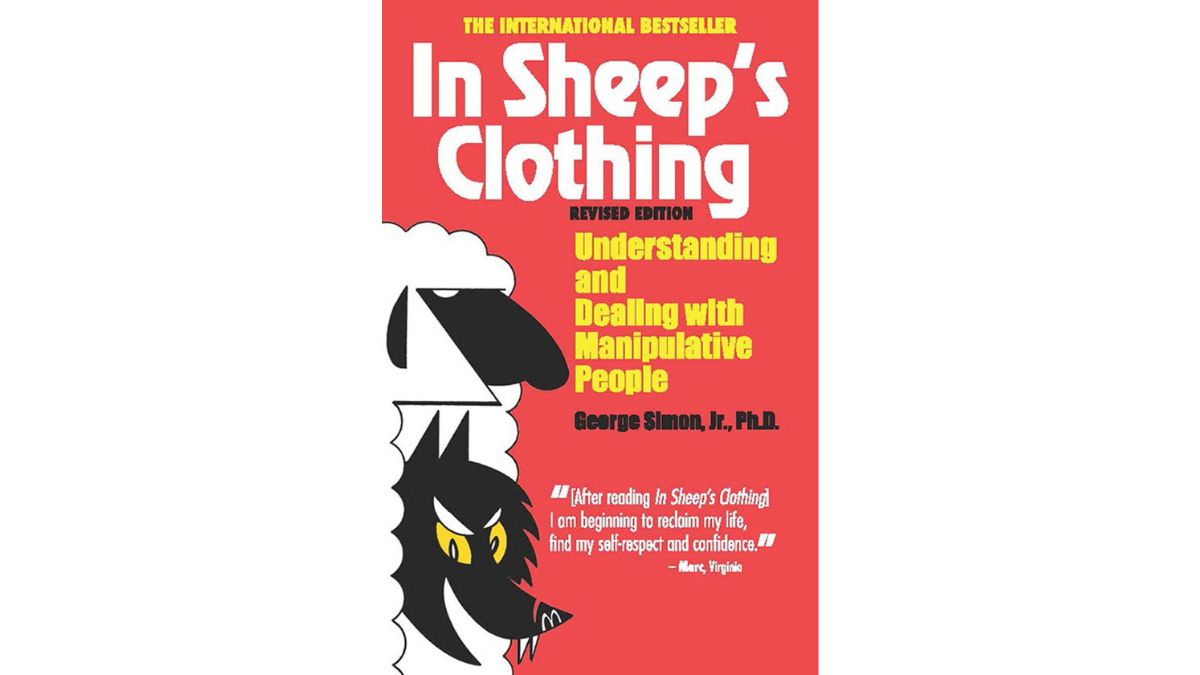
No matter who you are, a businessman, therapist, or school teacher, in time you will find your life impacted by those who would try to manipulate you. Some people use manipulation in rare instances to gain temporarily advantage. However, others will often manipulate, often without others’ knowledge. To that end, it is important to understand the traits of manipulative people and to learn their techniques. George Simon has created the book, In Sheep’s Clothing: Understanding and Dealing with Manipulative People, for therapists and non-therapists alike to understand and learn to survive around manipulative people.
Traits of Manipulative People
Simon begins by describing the traits and characteristics of manipulative people. He often describes manipulators as “covert-aggressive,” as they focus above all else on winning by using covert means. Often, it is hard to spot a covert-aggressive, as they will appear charming and socially pleasant. Only when one gets to know them does one discover something is “not right” about them, usually too late, by which point one has already been manipulated. Simon makes the point of distinguishing covert-aggressive from passive-aggressive, as a passive-aggressive is passive and will not plot or plan methods to manipulate. When a situation arises, a passive-aggressive will show aggression by defying their target’s will, but will not actively devise plans or schemes to gain an advantage. A covert-aggressive will plot, plan, and scheme methods to gain an advantage regardless of the pain and misery others will feel. Winning is the motivating factor, and for a covert-aggressive, the ends justify the means.
Real World Examples
Simon does an excellent job of providing real-world examples that illustrate the different kinds of covert-aggressive tactics. From the father who pushes his daughter to earn all A’s to fuel his pride, to the minister whose “service to God” reflects his status and power, to the child who manipulates her parents to avoid responsibility, these examples illustrate just how a manipulator operates. Simon gives a scenario, a real-world example from his therapeutic past, and then breaks it down and shows the different tactics of manipulation used. This allows the reader to understand the various tactics of manipulation and empowers them to start looking for these tactics in their lives.
Manipulation Tactics
Simon goes over the various tactics manipulators use, from guilt-tripping to victimization. Below is a list of many manipulators’ tactics, with brief explanations.
Guilt-Tripping: The manipulator will guilt the victim into feeling as if they are the injured party, or that something bad will occur if they do not give in. This is a button that manipulators often push.
Shaming: The manipulator will show just how bad others will feel about their inaction, making the person feel as if they should be scorned for it.
Victimization: As the victim tells the manipulator how they do not wish to be manipulated, the manipulator will switch roles and become the victim, the injured party, and will pout and shame until their needs are met.
Rationalization: The manipulator will give logical, realistic examples as to why their needs matter most and are for the good of all.
Surviving Manipulation
By recognizing the tools manipulators use, Simon gives the reader a framework for better surviving and dealing with manipulators. When dealing with a manipulator, be on the lookout for their attacks, and when one comes, note it and tell them it will not work. If this behavior is repeated, the manipulator will realize that their attacks will no longer be effective. Also, Simon urges victims to control the rules of the game by creating conditions in which both the manipulator and the victim win, since a manipulator values winning above all else.
While Simon’s work is an excellent primer on manipulation, it is not without its weaknesses. Simon does not go into enough detail on how to directly work with manipulative people beyond learning their tactics. Not much information is given on exactly how to deal with a manipulator for an extended period.
A Must-Read Primer on Manipulation
If you feel you have a manipulator in your life, it would be beneficial to read In Sheep’s Clothing, as it is an excellent tool for everyone. This work has been widely popular and is in numerous formats, including audiobook. I recommend this book and will keep it in my library.
Audio Book Link: Click Here.
Paperback Link: Click Here.

- Heavy Social Media Use Linked to Anxiety in Medical Students - May 11, 2026
- Can We Trust the Research Behind ABA Autism Therapy? - May 11, 2026
- Are Girls Biologically Protected Against Autism? - April 29, 2026